
By Kien Lee
When the original Horological Machine N°11 debuted in 2023, it challenged every convention of watchmaking by presenting itself as a piece of wearable architecture. Conceived by Maximilian Büsser and Eric Giroud, the design drew from the organic and neo-futuristic structures of the sixties and seventies.
Now for 2025, designer Maximilian Maertens has revisited this miniature home through a new lens that captures the glamour of the 1930s to create the next chapter known as the HM11 Art Deco.
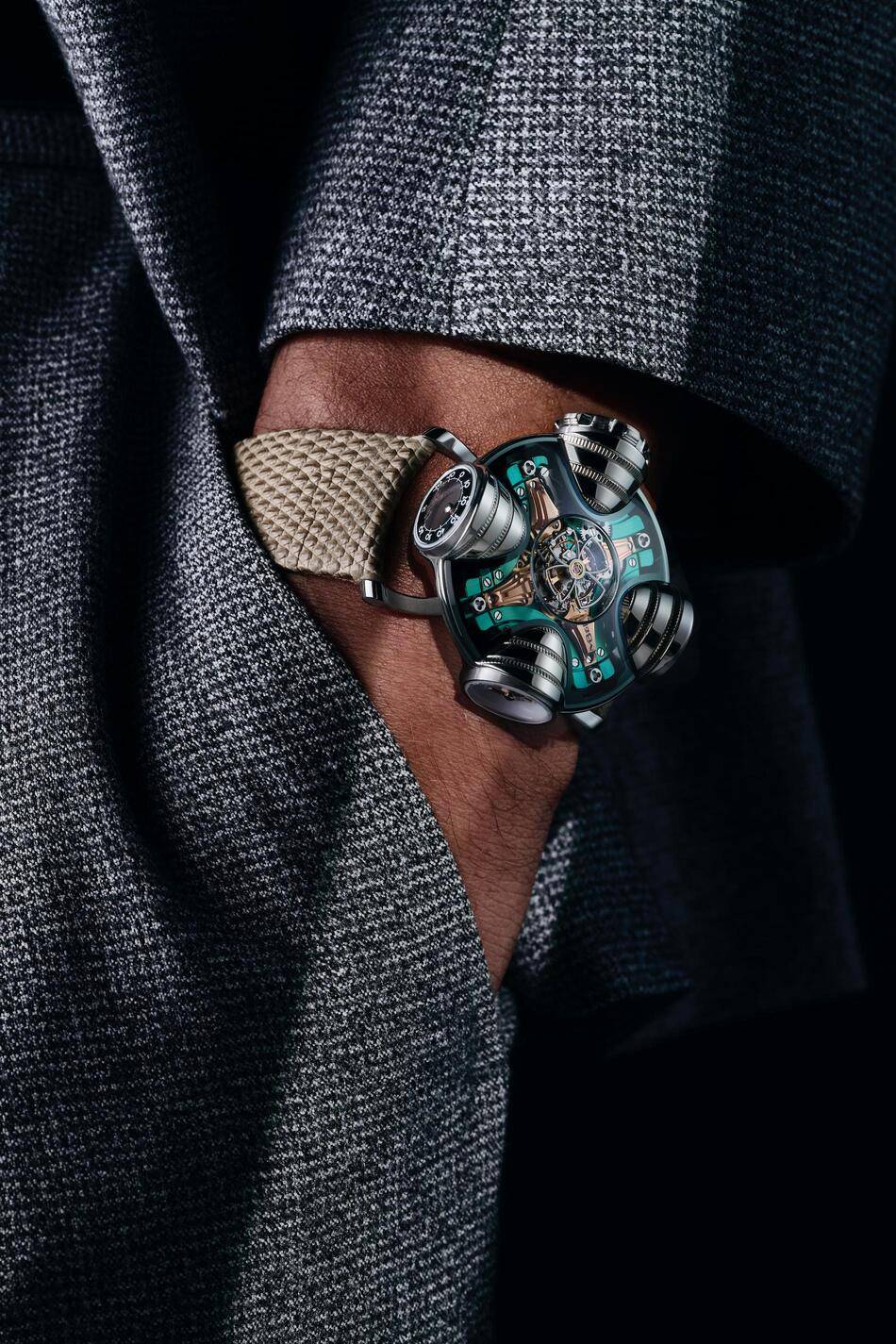
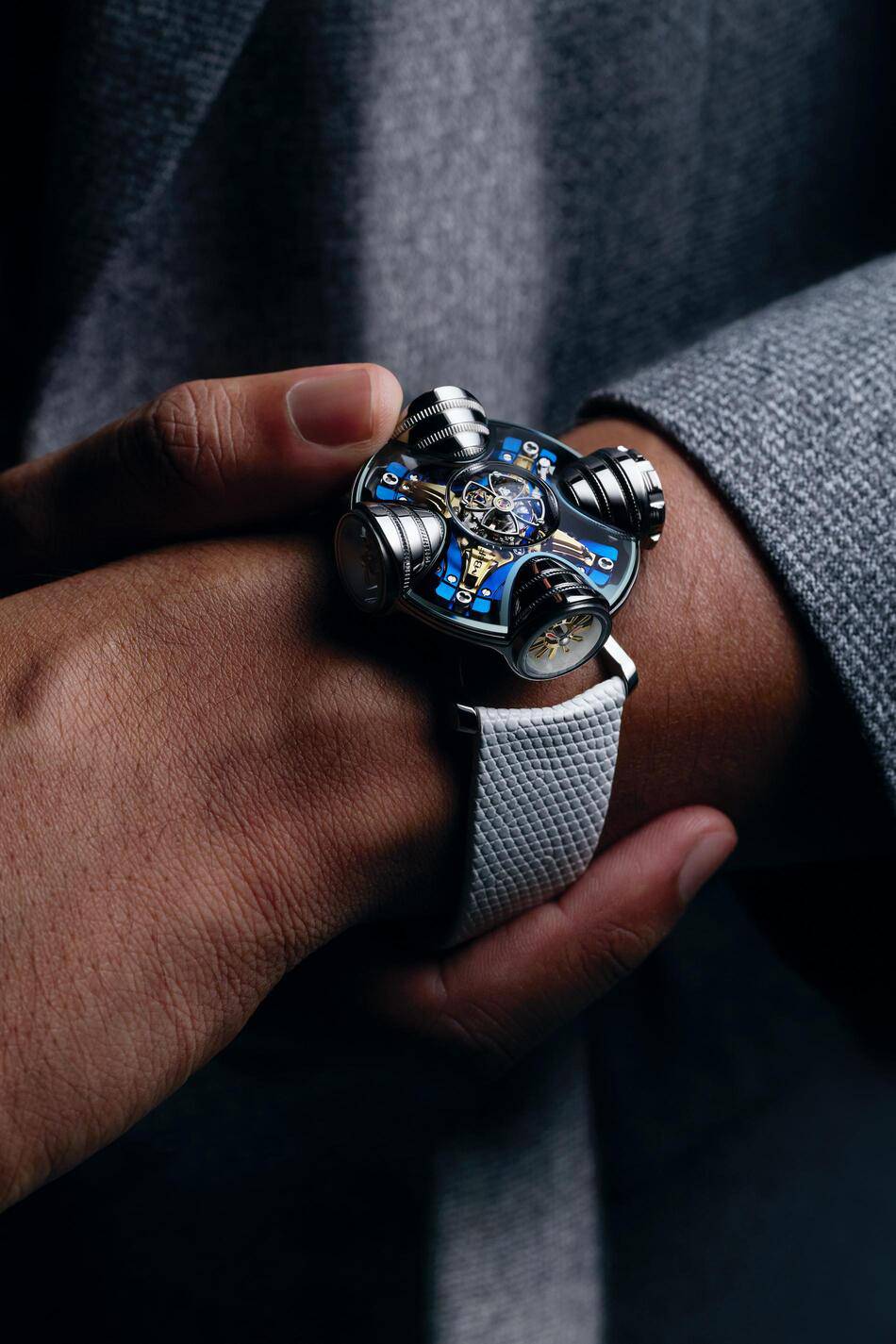
The original Architect edition was famously inspired by the Le Corbusier maxim that a house is a machine for living. It transformed the traditional watch case into a central atrium featuring a flying tourbillon surrounded by four symmetrical rooms. Each room served a specific purpose, ranging from the time display and power reserve to a mechanical thermometer and a time setting module. The entire 42mm grade 5 titanium case could be rotated to align a chosen room toward the wearer, where every forty-five degree turn of the case provided seventy-two minutes of power.

The new HM11 Art Deco maintains these mechanical foundations while adopting a visual language inspired by Parisian cinemas and Manhattan skyscrapers. Maertens has replaced the original organic fluidity with the disciplined geometry of the Art Deco movement.
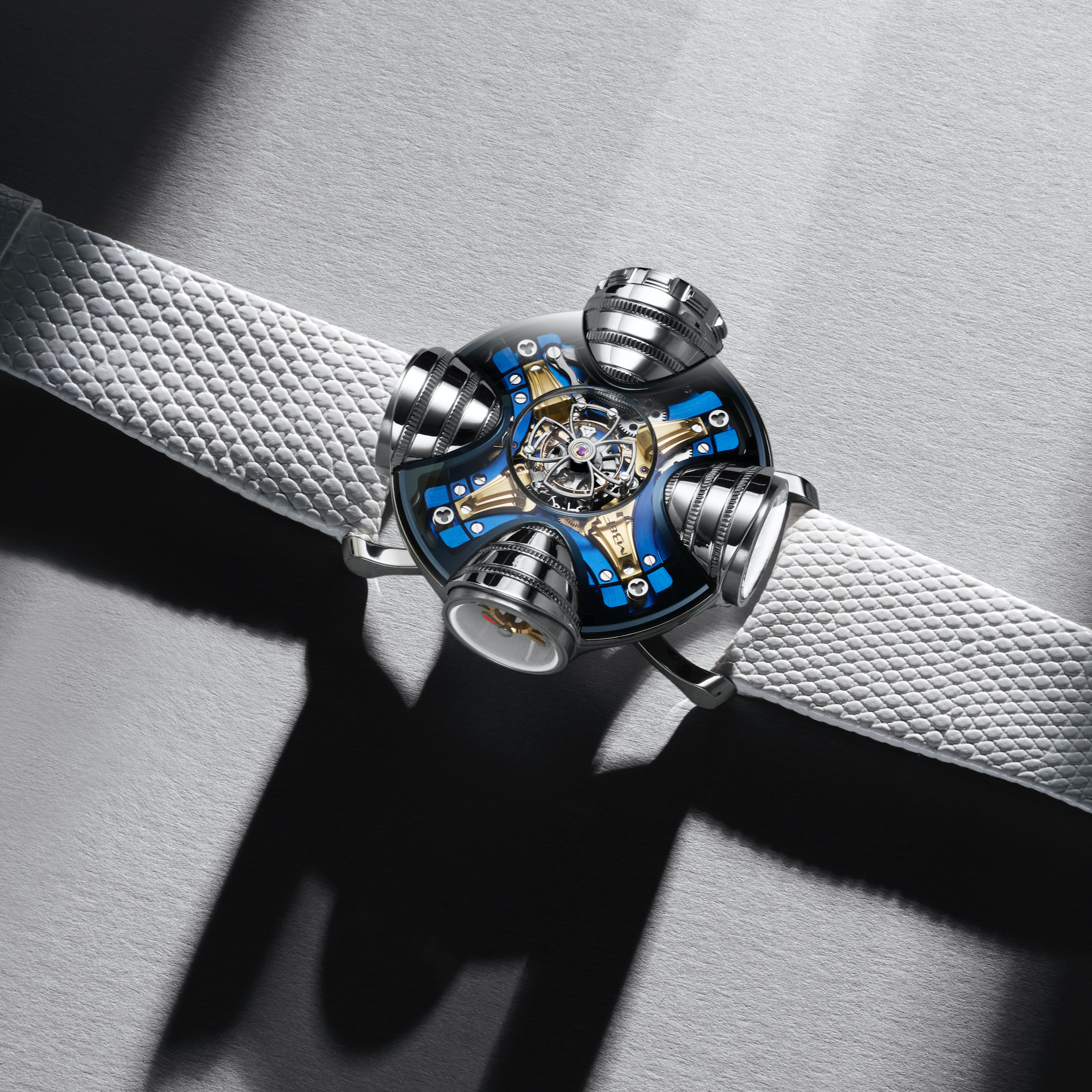
On the dial side, partially skeletonized sunbeam motifs now take center stage alongside period inspired typography and hands that feature a red stained glass effect achieved through translucent enamel.
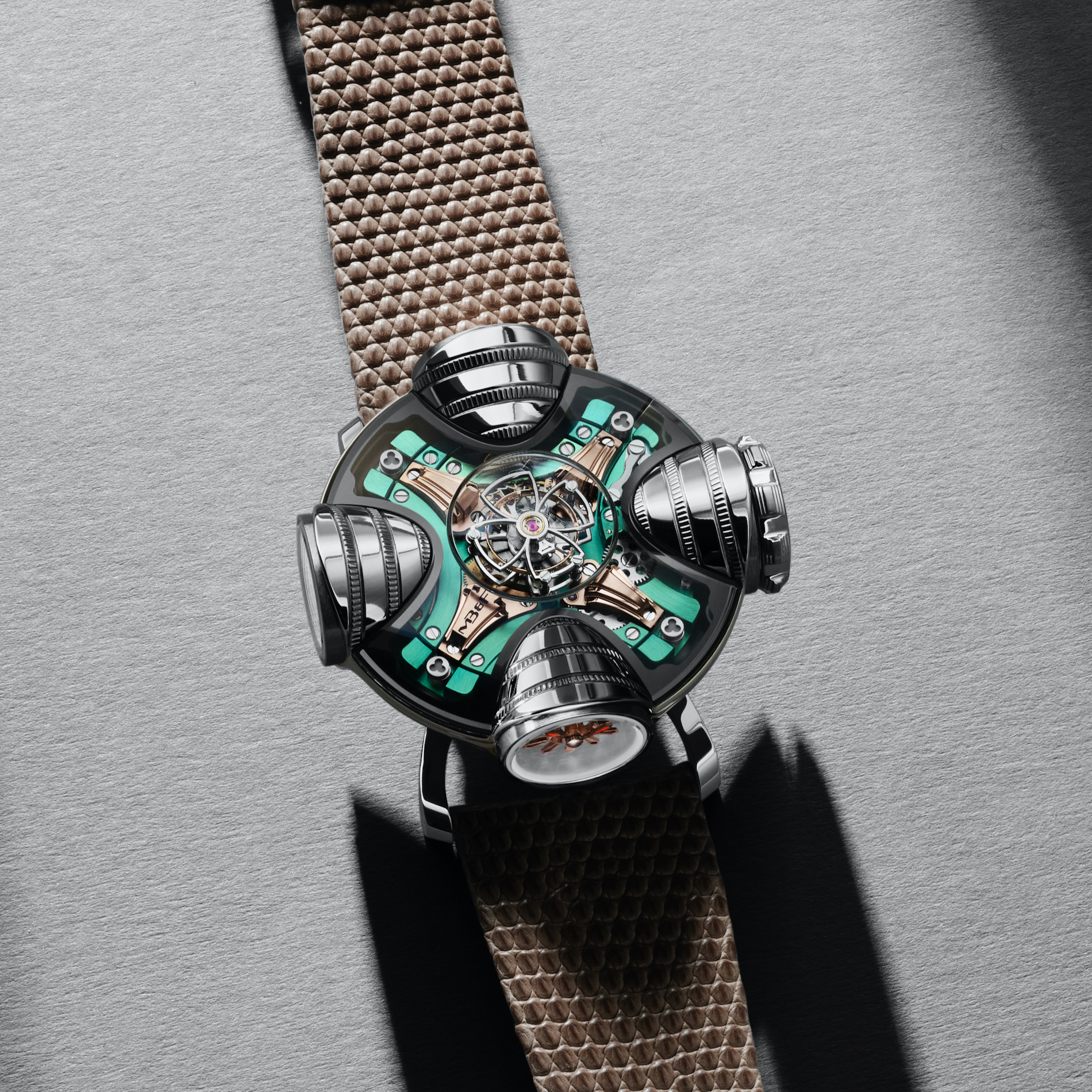
Every detail of this new edition reinforces a sense of upward momentum reminiscent of a city skyline. The bridges have been redesigned into vertical forms that echo ornamental stonework, while the grooved profiles of the sapphire roof mirror the stepped silhouettes of icons like the Chrysler Building.
While the first HM11 Architect evoked the soft concrete curves of the seventies, the Art Deco stands as a graphic and structured city in miniature. Both machines ultimately share the same visionary spirit as a horological structure intended to be lived in rather than merely worn.